
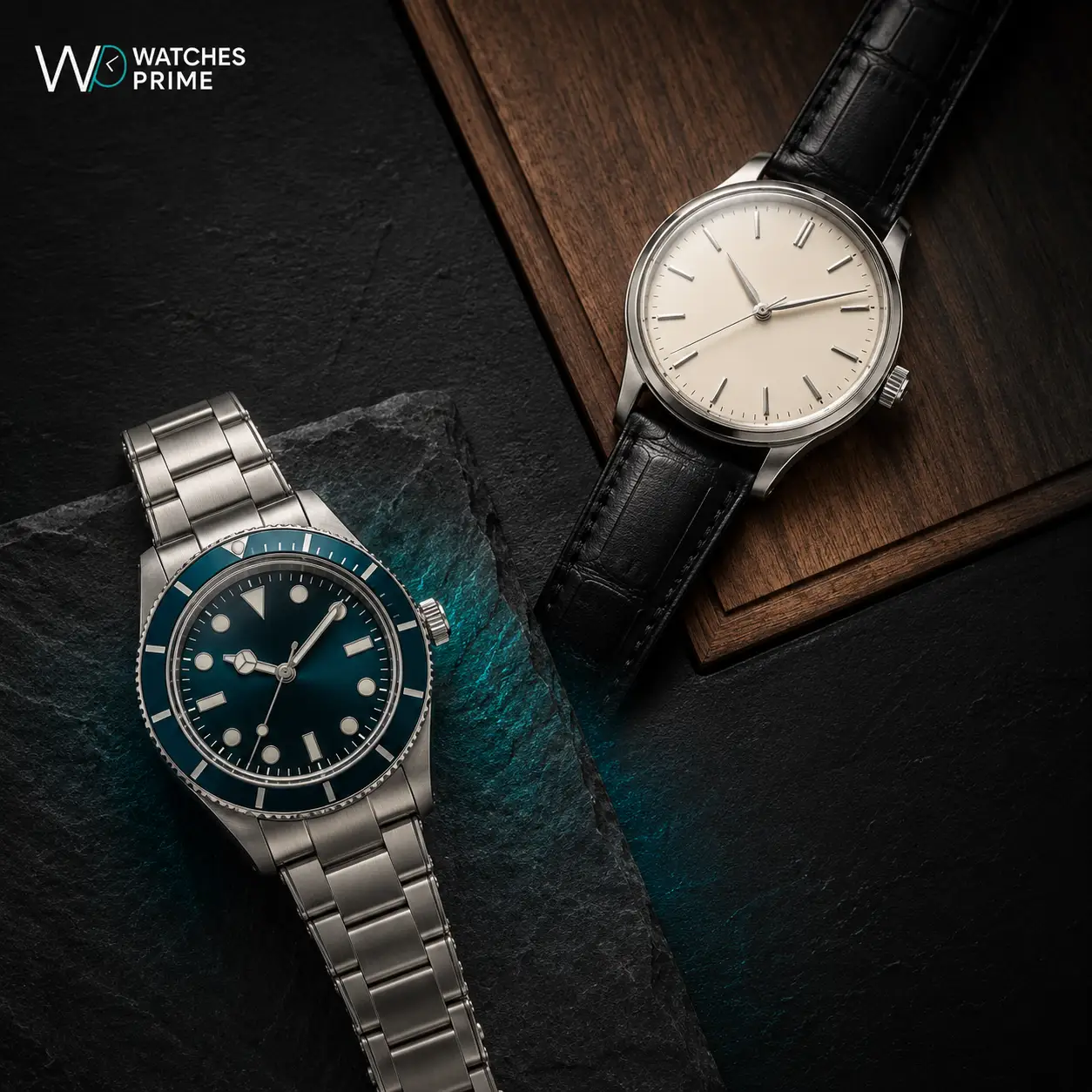
Standing in front of a display case with Orient and Seiko side by side, most buyers ask the same question: which one actually deserves a spot on the wrist? The real answer has less to do with which brand is “better” and more to do with which philosophy fits your lifestyle and budget.
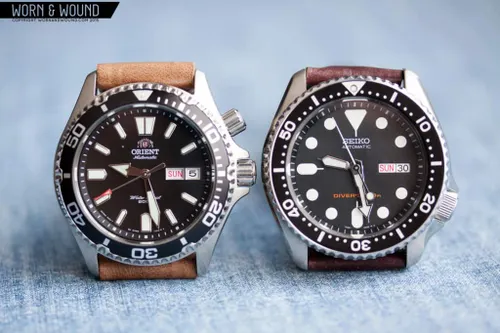
Both brands trace their roots back to Japan and share a common industrial history, yet each took a different path. Orient leans on straightforward mechanical honesty and practical design, while Seiko built its name on range and continuous innovation across generations of movements and models. An Orient vs Seiko comparison reveals real differences in build quality, price, and everyday wearability.
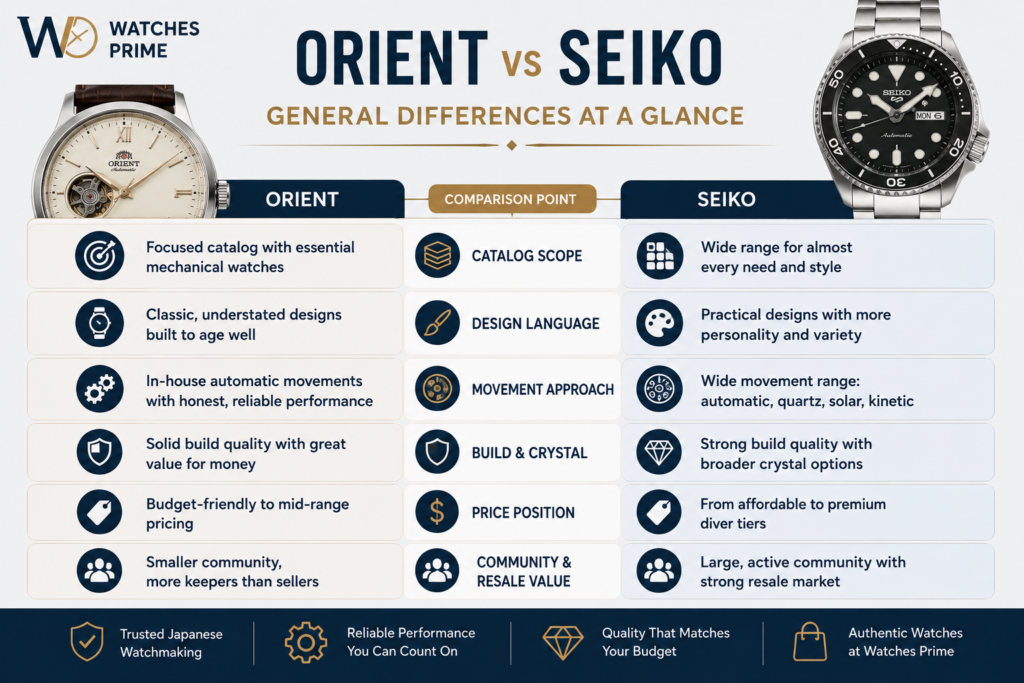
Orient Offers A Trusted Starting Point For Japanese Mechanical Watches
Since its early days in Tokyo, Orient built its reputation on mechanical watches that feel genuine rather than flashy. The brand does not chase luxury trends; instead, it focuses on practical, character-driven design meant to last for years.
The Orient Bambino is a clear example of this approach, with its domed crystal and curved dial markers creating vintage charm without slipping into nostalgia. Every detail serves a purpose: legibility, classic styling, and all-day comfort on the wrist.
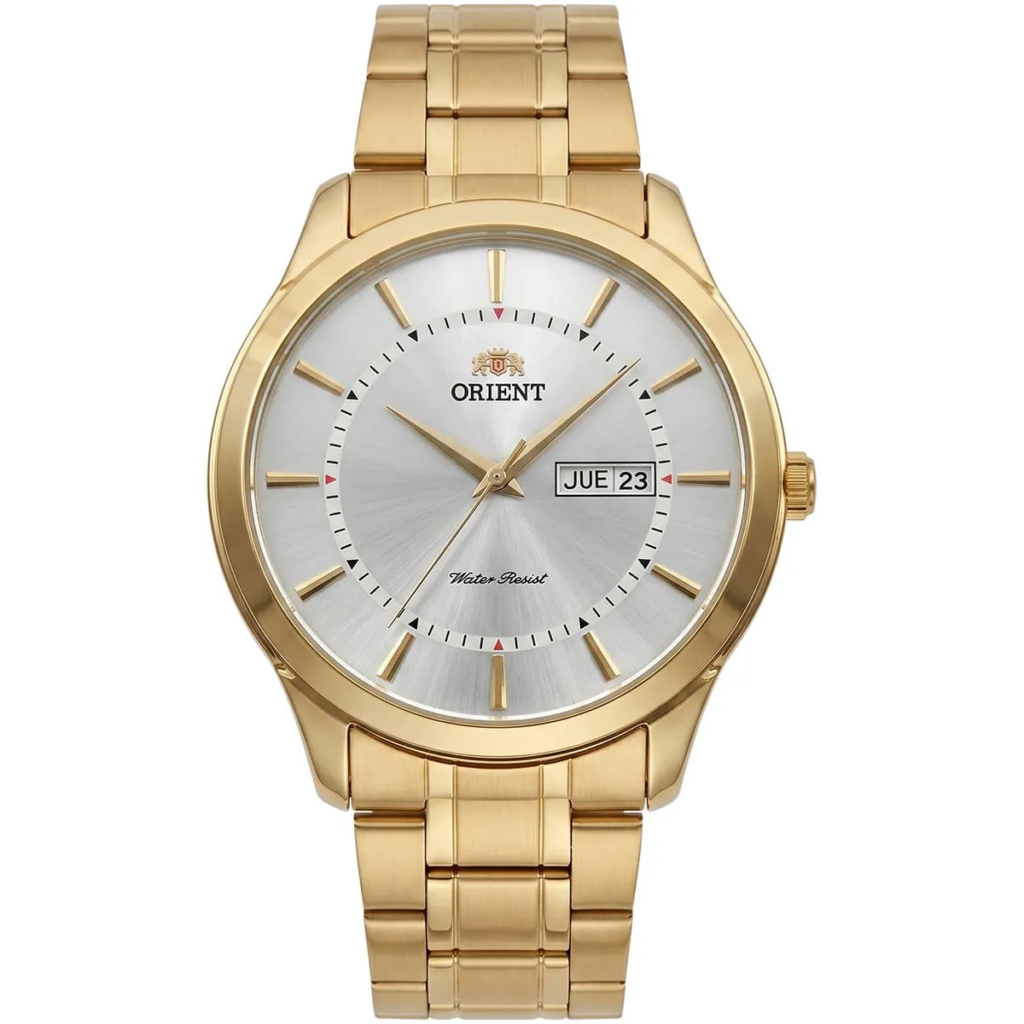
Orient Men’s Gold-Tone Silver Dial Day-Date Watch
Seiko, by contrast, has built its identity since 1881 on steady evolution that blends technical reliability with thoughtful design.
The Seiko SRPE51 shows how the brand modernizes without abandoning its roots, borrowing the familiar SKX silhouette but swapping the dive bezel for a clean, brushed case and a simple grey dial.
Buyers looking for a first mechanical watch or a dependable daily piece with personality usually lean toward Orient.
Those who want a touch more polish and variety tend to connect with Seiko, since it blends tradition with modern craftsmanship in a way that feels timeless rather than trendy.

Catalog Scope: The Real Difference Between Orient And Seiko
Orient’s strength is focus. The catalog is not sprawling, but it covers what most collectors actually care about: mechanical watches that balance charm, durability, and affordability.
The Orient Ray II shows the payoff of that focus, with an in-house automatic movement, smooth bezel action, and strong lume that make it a standout in the budget diver space.
Seiko’s advantage is range. The brand builds watches for nearly every scenario, from diving and dress to sport and travel, so finding a suitable Seiko without straining the budget is rarely difficult.
The Seiko Sumo demonstrates this balance well, with a solid yet proportionate case, spot-on dial legibility, and finishing that outperforms its price point.
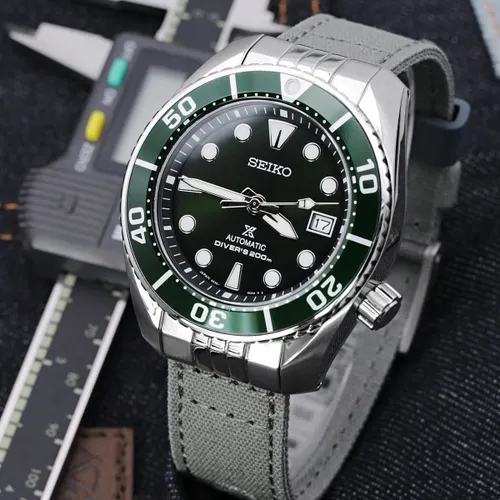
Orient earns its value by mastering the essentials, building mechanical watches that feel intentional rather than mass-produced. Seiko earns its value through breadth, proving that a wide lineup does not have to dilute brand identity.
Design And Wearability: Understated Balance Versus Playful Utility
Orient’s design language centers on classic restraint. The brand builds watches that look good today and will still look good a decade from now, without leaning on flash or gimmicks.
The Orient Kamasu captures this well, with balanced proportions, a clean dial layout, and bezel action that feels firm without being stiff.
Seiko tends to bring more personality into its practicality. The Seiko 5 GMT shows how the brand can make a travel watch feel both fun and functional, with case finishing that punches above its price and a rotating bezel that adds color without becoming distracting.
Orient delivers timeless confidence through classic designs that age well. Seiko delivers everyday energy through practical watches that carry just the right amount of character.
Read also: Comprehensive Orient Quartz Watch Review: Are They Worth Buying?
Build Quality And Technical Approach Compared Across Movements, Cases And Crystals
Both brands make watches built for real daily use, but their engineering priorities differ in movement type, case construction, and crystal choice.
Automatic Movements At Orient Versus Seiko’s Broader Movement Range
Orient keeps things mechanically straightforward. The in-house automatic movements found in models like the Orient Mako II are not chasing COSC certification, but they stay consistent, easy to regulate, and feel honest on the wrist.
The F6 caliber added hacking and hand winding, small upgrades that make a real difference day to day.
Seiko thrives on variety, producing mechanical, quartz, solar, and kinetic movements, often executed well across the board.
The Seiko SNE329 with its solar movement gained only about a tenth of a second per day over sixteen days of testing, a level of accuracy that rivals far pricier quartz watches.
Case Construction And Crystal Choices In Orient And Seiko Watches
Orient cases feel sturdy and grounded. The Orient Mako II proves that brushed steel can look sharp without pretending to be luxury, while moving into Orient Star territory brings tighter tolerances and smoother bezel transitions.
Seiko’s casework tells a slightly different story. The Seiko Turtle strikes a balance between rugged and comfortable, wearing smaller than its 44.3mm case suggests thanks to a smart offset crown placement.
Crystal type varies by line for both brands. Most entry-level Orient models use mineral glass, with well-known sapphire exceptions such as the Kamasu, while Orient Star models are predominantly sapphire, often with an anti-reflective coating. Seiko relies on proprietary Hardlex for most affordable models, moving to full sapphire on professional divers like the Seiko Marinemaster.
Read also: Comprehensive Orient Automatic Watch Review: Performance and Value Analyzed
| Comparison Point | Orient | Seiko |
| Dominant movement type | In-house automatic (F6 caliber) | Mixed: automatic, quartz, solar, kinetic |
| Entry-level crystal | Mineral, with select sapphire models | Hardlex |
| Common water resistance | Up to 200m (Mako II) | Up to 200m, ISO 6425 rated (Turtle) |
| Typical price positioning | Budget-friendly to mid-range | Spans budget to premium diver tiers |
| Lume performance | Consistent and reliable | Lumibrite, bright and long-lasting |
How To Spot An Authentic Orient Or Seiko Before You Buy?
A genuine automatic movement produces a consistent, even ticking sound when the watch is shaken gently, and the serial number is engraved with sharp, precise detail on the case back or between the lugs.
On an Orient, weight and balance between case and bracelet matter; counterfeit pieces are often noticeably lighter due to cheaper materials.
On a Seiko, check the sharpness of the dial printing and the smoothness of the rotating bezel’s click action, both common weak points on replicas.
Buying through Watches Prime removes most of this guesswork, since every watch goes through an authenticity check before it appears in the Original Watches category, giving genuine peace of mind to buyers who have been burned before.
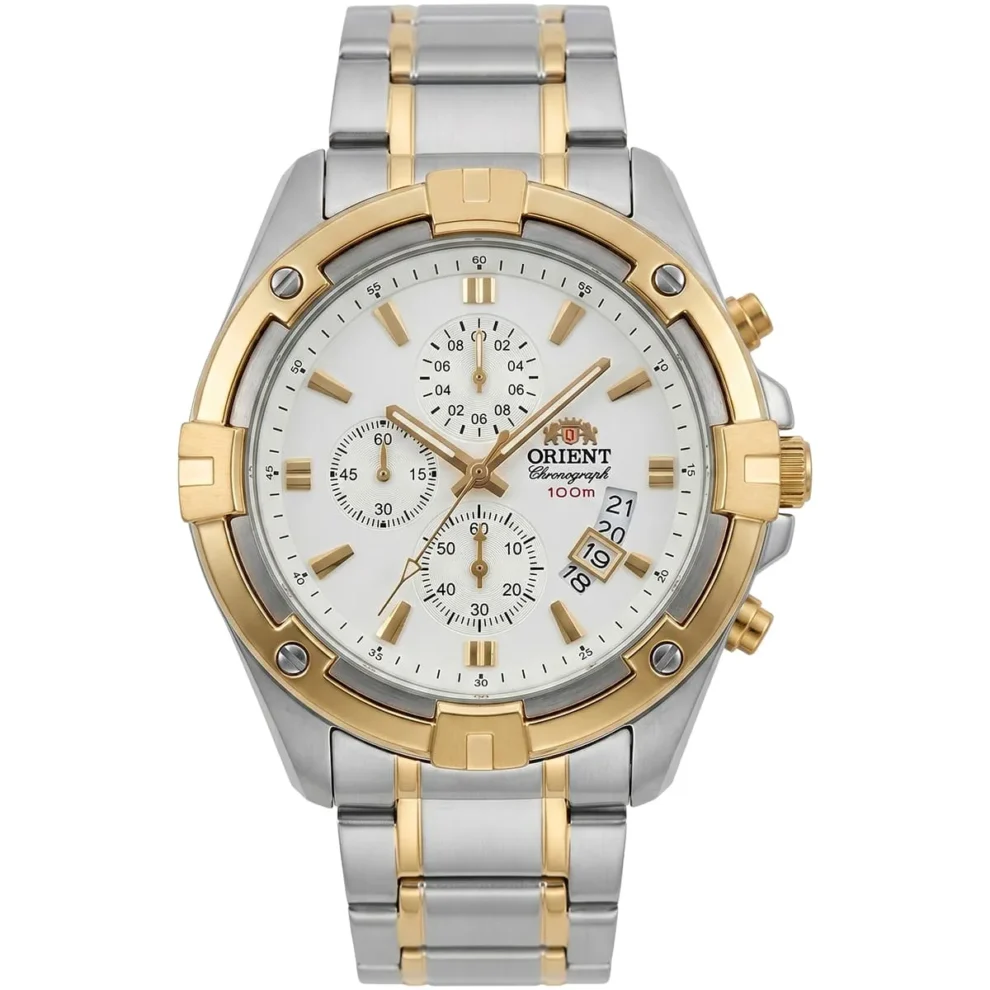
Orient Men’s Chronograph Two-Tone Silver & Gold Watch
Pricing Factors For Orient And Seiko Watches And What Actually Drives Them
Price for either brand comes down to a handful of clear factors: the specific model, movement type, condition, and whether the original box and papers are included.
Local demand for a particular reference can push its price well above a similar but less recognized model in the same category.
Core Orient models such as the Bambino and Mako II tend to sit in a budget-friendly range that suits first-time buyers, while Orient Star pieces command more due to finer finishing and sapphire crystal.
Seiko spreads across a wider price spectrum, from affordable 5 Sports models to premium references like the Marinemaster.
Read also: How Much Do Fossil Watches Cost in Egypt Today?
Community And Resale Value Differences Between Orient And Seiko
With Orient, the experience leans more toward wearing than collecting. Many owners buy a Bambino or Mako II as their first mechanical watch and never feel the urge to sell it.
Vintage Orient Star references and oddball older models occasionally surface among dedicated collector circles.
The Seiko community stays in constant motion. Models like the SKX, Turtle, and 5 Sports change hands frequently, sometimes modified or restored along the way. Discontinued divers and special editions tend to appreciate over time, while everyday Seikos stay active on the resale market.
Orient Vs Seiko: Which Brand Offers Better Value For Your Money
Orient proves that affordable does not have to mean forgettable. Simple mechanics, honest design, and durability that exceeds expectations define the brand, and most models are built to be worn hard rather than resold.
Seiko stretches value across tiers, improving finishing, materials, and movement range at higher price points while keeping everyday reliability intact. Buyers pay more but gain access to a larger global community and stronger resale potential.
If a no-nonsense mechanical watch that stays true to its roots is the goal, Orient still sets the benchmark for entry-level value.
If a brand that scales with evolving taste and a deeper collection matters more, Seiko remains the more complete long-term choice.
Shop Authentic Orient Watches At Watches Prime
Whether Orient’s honest simplicity or a broader Japanese lineup fits your style, buying from a trusted source is what protects both authenticity and after-sales support.
- Trusted online store since 2013
- Local and worldwide shipping
- Easy 14-day returns
- Real product warranty
- 100% secure checkout via Instapay, Vodafone Cash, and cash on delivery
- Over 300,000 satisfied followers
Browse the Orient watches category now or visit the full shop to find your next Japanese watch.
Conclusion
Choosing Orient means getting an honestly built mechanical watch, a simple design that ages well, and a price point that suits a first-time buyer without financial hesitation.
Choosing Seiko means access to a wider catalog spanning diving, travel, and dress categories, backed by an active collector community and a price range that grows alongside your taste.
In the end, the Orient vs Seiko question has no single right answer, since both brands deliver real value, and the difference comes down to which philosophy fits how you actually wear a watch.
Frequently Asked Questions About Orient Vs Seiko
Is Orient better than Seiko for beginners?
Orient is often the better pick for beginners since it offers an in-house automatic movement at an accessible price with a simple, classic design. Seiko suits buyers who want more category variety right from the start.
Models like the Orient Bambino or Orient Mako II deliver an honest first experience with mechanical watches without complexity or a high price tag.
That does not mean Seiko is difficult for beginners, but its broader range can feel overwhelming for a first purchase.
What is the difference between Orient movements and Seiko movements?
The core difference is that Orient focuses on simple in-house automatic movements like the F6 caliber, while Seiko produces multiple movement types including automatic, quartz, solar, and kinetic.
This variety gives Seiko more flexibility across different use cases, while Orient keeps mechanical simplicity as a consistent thread through most of its catalog.
Are Orient watches as water resistant as Seiko watches?
Some Orient models like the Mako II reach 200m water resistance, but they are not officially rated as ISO 6425 dive watches the way the Seiko Turtle is.
In practical terms, Orient offers water resistance suitable for swimming and daily use, while Seiko sticks to stricter international standards in its professional diver lineup.
How do I know if an Orient or Seiko watch I’m buying is authentic?
Check the sound of the automatic movement when the watch is shaken, the sharpness of the engraved serial number, and the overall weight compared to known authentic examples. Buying from a trusted source remains the most reliable safeguard against counterfeits.
That concern largely disappears when buying through Watches Prime, since every watch is authenticity-checked before being listed in the Original Watches category.
Is Orient Star worth the price jump over standard Orient models?
Yes, if finer finishing, a sapphire crystal, and a more accurate movement matter to you. The Orient Star line noticeably raises quality compared to entry models like the Bambino or Mako II.
The difference shows clearly in bezel smoothness and the transition between polished and brushed surfaces, which justifies the price gap for collectors who care about finer details.